- The rent test
- The residents: machines that earn the counter
- The commuters: weekly machines, one shelf away
- The guests: seasonal machines, boxed without shame
- The safety layer every tier shares
- The workflow test: one dinner, timed
- Cords, cleaning and the machine that stays clean
- Three kitchens, three counters
- The counter, priced as a system
- What the audit gives back
Every kitchen has a fixed budget that nobody wrote down: the counter. Twelve to twenty running feet in an average home, minus the sink, minus the stove, minus the landing zones beside each, leaves perhaps six feet of actual working surface, and every appliance that parks on it pays rent in the kitchen's scarcest currency. The toaster that toasts twice a week occupies the same real estate as the cutting board that works daily. Nobody audited it. It just happened, one gadget at a time.
That audit is overdue, and it sorts the counter-top machines we build into the ones that earn a permanent spot, the ones that should live on a rack and commute, and the ones whose value depends entirely on your household's habits. Prices are from our last update, and the food-safety claims are not ours: they come from the federal food-safety pages linked at the end, which we read before quoting.
The rent test
The audit runs on one question per machine: what does this appliance do for the household per week, divided by the inches it occupies per day?
Notice the units. Value accrues weekly, but the footprint costs daily, because a counter is consumed by presence, not by use. A machine used every day at breakfast can justify a permanent foot of counter. A machine used every second Sunday cannot, no matter how good the Sundays are. This is not an argument against the second machine. It is an argument about where it sleeps.
The answers sort every counter-top machine into three tiers.
| Tier | The rule | Where it lives |
|---|---|---|
| Residents | Used most days, ready state matters | On the counter, plugged in |
| Commuters | Used weekly, setup takes a minute | On the rack, one shelf away |
| Guests | Used seasonally or for events | Cabinet or closet, boxed |
Most kitchen frustration traces to tier confusion: residents buried in cabinets, guests squatting on prime counter. The tiers below walk our own machines through the test honestly, including the ones that lose.
The residents: machines that earn the counter
The strongest resident case in our catalog is the dual-basket air fryer, 9.5 quarts across two baskets, $64.98 in the current update. Its argument is frequency: it is a second oven that needs no preheat, and weeknight cooking is a frequency game. Two baskets with independent settings finish two foods at one time, which is dinner's actual shape. A main and a side rarely want the same temperature. A machine that touches four dinners a week can bill for its footprint without embarrassment.
The ice maker earns residency in a different court. Fresh ice in minutes from a machine with a handle, $49.89 in the current update, sounds like a luxury until summer, guests or a hydration habit makes it infrastructure. This is the tier system working as intended: in an iced-coffee household it is a resident. In a household that fills two trays a month it is a guest, and an honest audit will say which one yours is.
The third resident seat is situational, and in many homes it belongs to the pressure cooker. Ours is the compact 3-quart format, ten functions in one pot, $39.95 in the current update: pressure for the beans and the stew, sauté in the same vessel, rice without a dedicated rice machine. In a small kitchen the multi-cooker is often the resident precisely because it replaces three appliances that would each have wanted their own inches.
Residency also has a time-of-day dimension that the audit should respect. Breakfast machines hold a special claim: whatever the household touches before seven in the morning deserves a ready state, because nobody sets up equipment half-awake. If the morning runs on smoothies, the blender is a resident no matter what the weekly math says. If it runs on toast and coffee, the blender commutes and the toaster stays. The morning shift is the one part of the schedule where convenience honestly outranks arithmetic, and pretending otherwise produces audits that get quietly repealed by the first busy Tuesday.
A counter is not storage. It is a stage, and everything standing on it should be in the current show.
The commuters: weekly machines, one shelf away
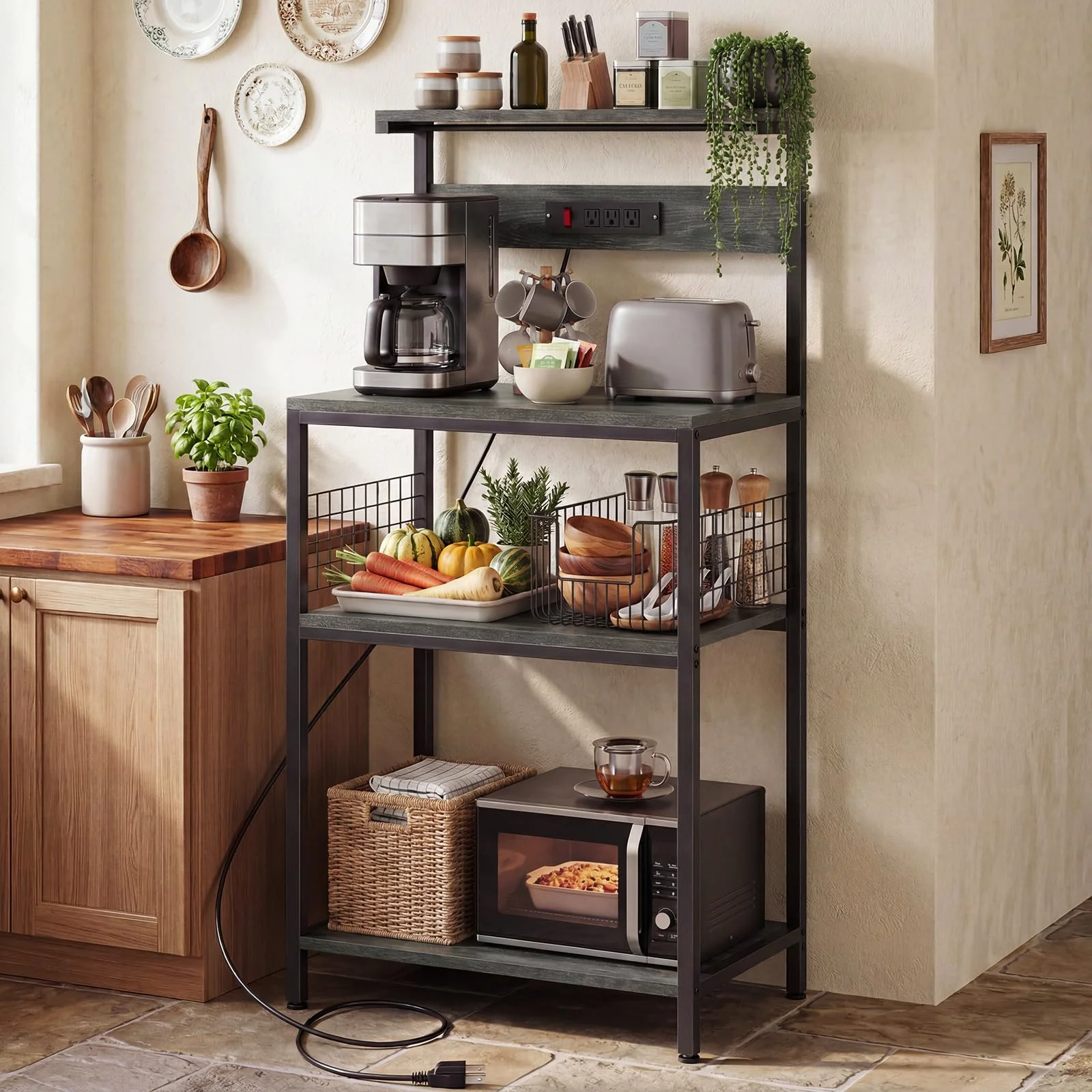
The commuter tier is where most good machines belong, and it only works if the shelf is real. Ours is: the bakers rack with a built-in power outlet, $49.99 in the current update, 23.6 inches of steel shelving that parks the appliance fleet one step from the counter. The outlet is the detail that makes it a garage rather than a warehouse. The machine on the middle shelf works right where it stands, no counter required.
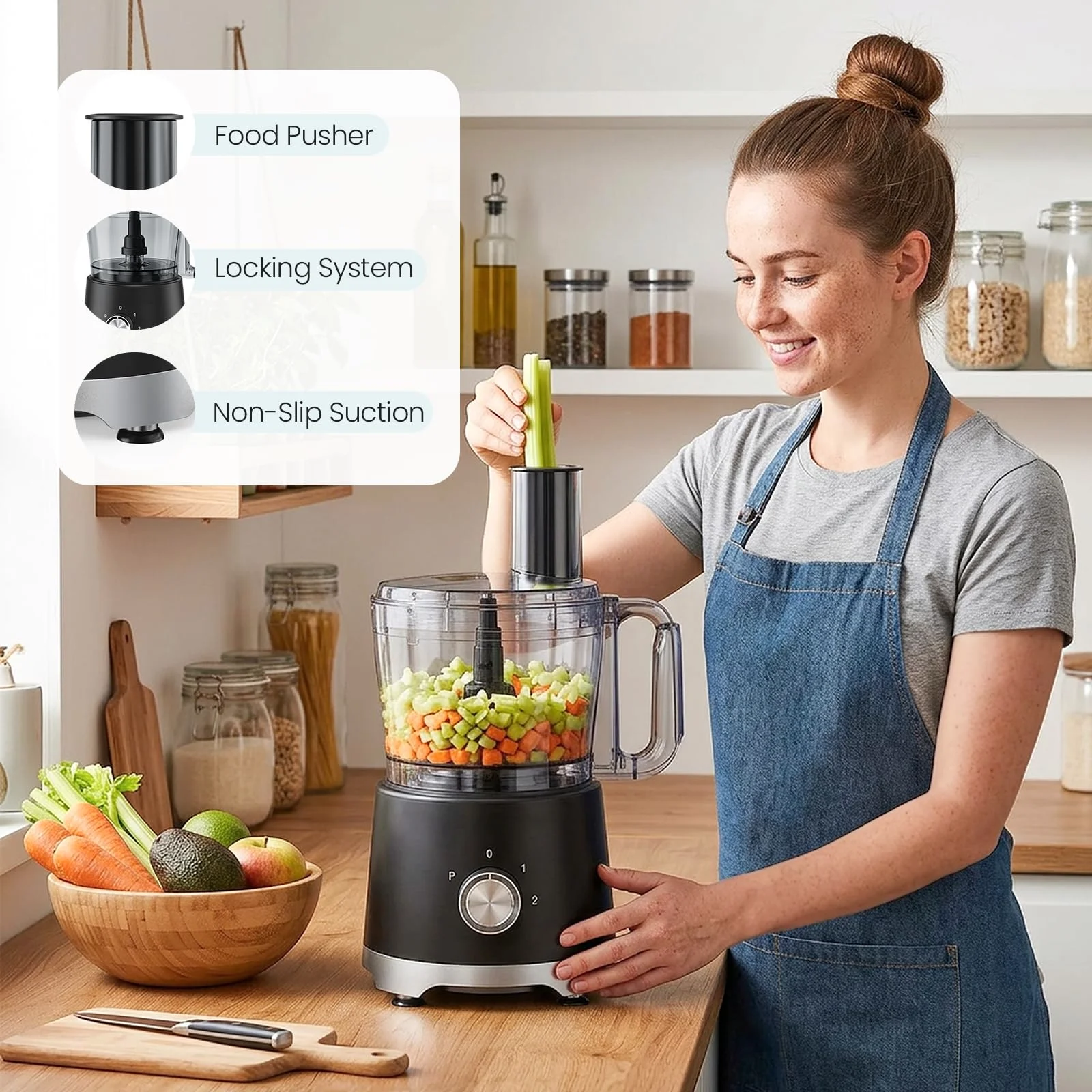
The commuters themselves are the machines with a weekly rhythm. The food processor, 10.5 cups with five blades, $35.90 in the current update, is the strongest example: on its day it replaces twenty minutes of knife work in two, and between days it has no ready state worth preserving. Same logic for the slow cooker, 8 quarts and programmable at $42.97. It works six unattended hours on its day, and none between. The blender, the stand mixer, the juicer: commuters all, each brilliant on schedule, each a squatter if left standing.
Federal guidance, incidentally, is on the slow cooker's side in a way worth quoting: the USDA's food-safety page on slow cookers calls the machine safe by design, cooking at a low 170 to 280 degrees Fahrenheit, and notes that it uses less electricity than an oven and keeps the kitchen cooler in summer. A commuter with those manners deserves its shelf.
The guests: seasonal machines, boxed without shame
The guest tier is not a demotion. It is a schedule. The deep fryer, 5 liters at $43.99 in the current update, produces the kind of meal households remember, roughly monthly. The dehydrator, eight steel trays at $99.99, runs long unattended days turning a fruit-box surplus or a jerky project into shelf-stable results, a few weekends a season. Both are excellent at their jobs and terrible as roommates, and both go back in the box between engagements, which is what the box was for.
The test for guests is not whether they earn counter space. By definition they do not. The test is whether they earn cabinet space, and it is the household's habits, not the machine's brochure, that answer. A fryer used never is not a guest. It is clutter with a cord.
The safety layer every tier shares
The machines differ. The food rules do not, and two of them do most of the work in a home kitchen.
The first is the temperature window. Bacteria multiply fastest between 40 and 140 degrees Fahrenheit, doubling in as little as twenty minutes. The federal food-safety pages call this range the danger zone, and the practical translation is blunt: cold food stays cold, hot food stays hot, and the space between is a countdown, not a state. Never leave perishable food out of refrigeration over two hours.
The second is what the first implies for appliances. The slow cooker's whole design honors the window from below, arriving at temperature and staying above it for the length of the recipe. The air fryer's short cycles honor it from the other side: food goes from cold to cooked without an afternoon in between. And the machine the temperature window quietly argues for is the one from the travel shelf of our catalog, the dual-zone car refrigerator, because the danger zone does not pause for the drive home from the grocery store in July.
None of this is medical advice, and none of it is ours. The danger-zone page and the slow-cooker page are both linked at the end, and both are shorter and better than the folklore that usually substitutes for them.
The workflow test: one dinner, timed
Tiers are theory until a dinner runs through them, so here is the test we use on our own machines: cook one ordinary weeknight dinner and narrate the counter.
Say the dinner is a roast chicken pieces and vegetables night for four. The air fryer takes the chicken in one basket and the potatoes in the other, two settings, one finish time. That is the resident doing resident work, zero setup because its ready state was the whole argument for its footprint. The salad wants the food processor for exactly ninety seconds of shredding. It commutes from the rack, works beside the sink, rinses, and returns. Nothing else moves. Total appliance logistics for the dinner: one shelf trip.
Now run the same dinner in the unaudited kitchen. The air fryer is in a base cabinet behind the pots, so the oven gets used instead, with its preheat. The processor is technically present on the counter but buried under the mail layer, so the knife does the shredding. The machines all exist. None of them worked. The difference between the two kitchens is not equipment, it is placement, and placement is free.
The timed-dinner test is worth actually running once, phone stopwatch and all, because it converts the tier system from advice into evidence. Households that time one dinner before and one after the audit stop needing the theory. The twenty recovered minutes argue better than any guide.
Cords, cleaning and the machine that stays clean
Two practical layers decide whether an audited counter stays audited, and both are unglamorous.
Cords first. A resident's cord is part of its footprint: coiled, clipped or shortened to the outlet's distance, because a loose cord annexes six inches of counter beyond the machine itself. The rack's built-in outlet solves the commuter version of the problem at the root. A machine that plugs in where it stands never trails a cord across the working surface. The kitchen with a drawer of tangled appliance cords is usually the kitchen where commuters became residents by never being unplugged.
Cleaning is the other half, and it obeys a rule of thumb worth stating: a machine gets cleaned at the tier it lives in. Residents get wiped daily like the counter they stand on, and their crumb trays and baskets go in with the dinner dishes. Commuters get cleaned before they return to the rack, not after they come off it, because a machine stored dirty is a machine that will not be chosen next week. The shelf silently demotes it. Guests get one deep clean before boxing, and the box gets the accessories taped inside the lid, because a fryer separated from its basket is two pieces of clutter pretending to be an appliance.
The stainless surfaces this catalog favors are not an aesthetic position. They are the cleaning argument in material form. Steel trays, steel racks and sealed plastics wipe back to neutral in seconds, which is the property that keeps a machine welcome in the open. The reason unaudited counters drift toward chaos is rarely laziness. It is that every surface on them costs a different cleaning effort, and the expensive ones stop being cleaned.
Three kitchens, three counters
The tier system bends to the kitchen it lands in, and the three most common kitchens bend it in predictable ways.
The galley kitchen, long and narrow, has the least counter and the strongest case for the rack: residents drop to one, usually the air fryer, and everything else commutes. The rack itself stands at the galley's open end, where its vertical footprint costs a corridor nothing.
The family kitchen, the large one that hosts homework as well as dinner, can afford two or three residents but suffers a different failure: the counter fills with non-kitchen sediment, mail, keys, the school form layer. The audit there is jurisdictional before it is appliance-based. The office guide's border rule, the home office corner, applies to counters verbatim.
The small-apartment kitchen, four feet of counter and a dream, runs the audit in hard mode: one resident, chosen by actual frequency, and the multi-function machines win almost automatically. The 3-quart pressure cooker that is also the rice pot and the sauté pan was designed for exactly this floor plan, and the rack becomes not an accessory but the kitchen's second half.
In all three, the same weekly habit keeps the audit honest: when a machine comes off the rack, note it. A month of notes is a census, and the census, not the memory of good intentions, decides who holds residency next quarter.
The counter, priced as a system
Here is the whole working kitchen above as one budget, at current-update prices.
| The piece | Tier | Price |
|---|---|---|
| Dual-Basket Air Fryer, 9.5 Quarts | Resident | $64.98 |
| Countertop Ice Maker with Handle | Resident, by habit | $49.89 |
| 10-in-1 Pressure Cooker, 3 Quart | Resident in small kitchens | $39.95 |
| Bakers Rack with Power Outlet | The commuter garage | $49.99 |
| Food Processor, 10.5 Cups | Commuter | $35.90 |
| 8-Quart Programmable Slow Cooker | Commuter | $42.97 |
| Electric Deep Fryer, 5 Liters | Guest | $43.99 |
| Food Dehydrator, 8 Steel Trays | Guest | $99.99 |
The full fleet lands around $427, but the point of the tier system is that no kitchen buys it as a fleet. A kitchen buys its residents first, the rack when the commuters outnumber the shelf, and the guests when their season actually arrives. Prices move between updates, the checkout always outranks the page when the two disagree, and the schedule itself lives on our update page.
What the audit gives back
Run honestly, the audit returns something better than tidiness. It returns the counter to the only resident that never had to apply: the work itself. Six feet of clear surface is where dinner is actually made, where the cutting board opens without negotiation, where two people can cook without choreography.
The machines did not leave. They were assigned. The residents stand ready, the commuters wait one shelf away with their outlet already live, and the guests sleep boxed until their season. That is the entire system, and it scales from the galley to the family kitchen without a single additional purchase, because it was never a shopping plan. It was a zoning decision, and the zoning, once made, keeps making itself.
The bedroom version of this argument is the small-bedroom upgrade, the office version holds down its own corner, and the rest of OLIXIS home gear, room by room, is on the front page, one standard and one click away.
